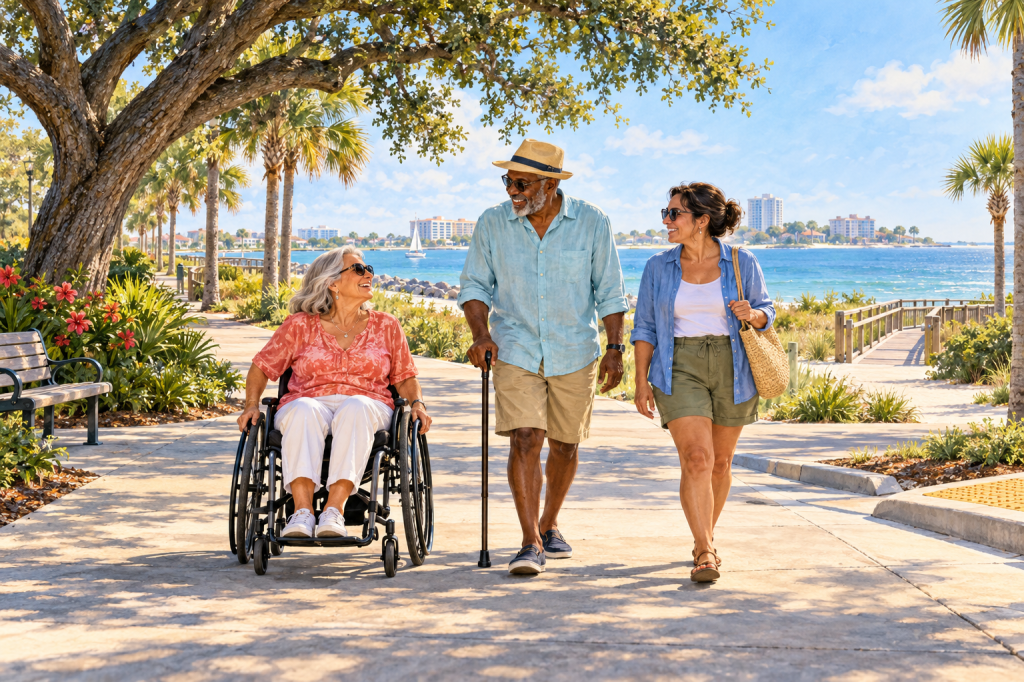
A waterfront view is wonderful. Being able to get out of your home, meet a friend for lunch, reach a medical appointment, and enjoy that waterfront matters just as much.
For someone living with a disability, choosing a Florida community involves more than comparing home prices and distances to the beach. It means asking a more personal question: Will this place make everyday life easier, or will it introduce obstacles I do not have now?
North Pinellas offers possibilities worth exploring, from coastal recreation to transportation assistance and independent-living resources. It also demands careful choices about housing, getting around, and preparing for storms.
The answer will differ from person to person. A wheelchair user, someone with limited vision or hearing, and someone whose disability involves fatigue, pain, or cognitive difficulties may need very different things from the same neighborhood.
Start with the life you want to live
Think about an ordinary week. Where do you shop? How often do you see a doctor? Do you enjoy restaurants, a library, a waterfront park, or community activities? Do you drive, use a mobility device, or depend on someone else for transportation?
Then, evaluate prospective homes against that routine.
A house that looks ideal in photographs may be a poor fit if reaching the grocery store requires a difficult road crossing. A smaller home near the places you regularly visit may offer more independence.
Try the actual journeys. Go from the front door to the parking space, from the bus stop to the medical office, and from the restaurant entrance to its restroom. Distances that look short on a map can feel very different on the ground.
The attractions are real—but check the whole outing
For a New Englander tired of negotiating snow and ice, the prospect of outdoor time in Florida is appealing. North Pinellas invites you to think about waterfront afternoons, parks, and outings without a winter coat.
There are specific accessibility resources, too. Florida State Parks identifies accessible amenities at Honeymoon Island in Dunedin, including the nature center, elevated beach boardwalks, picnic facilities, parking, and restrooms. Visit St. Pete-Clearwater publishes a beach-accessibility guide covering locations such as Fred Howard Park, Honeymoon Island, Clearwater Beach, and Sand Key.
But “accessible beach” needs explanation. A boardwalk may get you to the sand without getting your own wheelchair across it. A beach wheelchair may require a transfer and someone to help propel it. An accessible parking space does not tell you how far it is to shade or a restroom.
Before an outing, ask which access features are available now, whether equipment must be reserved, whether assistance is needed, and whether construction or storm repairs affect the route.
That same approach applies to downtown shopping and festivals: check entrances, surfaces, seating, restrooms, parking, and the return trip. The experience depends on the whole outing.
Transportation can determine your independence
If you cannot drive, transportation should be investigated before choosing an address.
PSTA lists ramps or lifts, audible stop announcements, and visual stop displays among its bus accessibility features. It also offers free individual travel training for seniors and people with disabilities.
For eligible riders who cannot independently use regular buses, PSTA Access provides prearranged, shared-ride, door-to-door paratransit. Eligibility involves how a disability affects use of the bus system; a diagnosis alone does not automatically qualify someone.
This can be a valuable resource, but it requires planning. Ask PSTA about your proposed address, usual destinations, operating hours, reservations, fares, and the assistance available. In particular, verify trips to appointments outside Pinellas County rather than assuming Access will take you there.
Also investigate the path to a regular bus stop. Can you reach it safely? Is there seating or shade? How manageable is the trip when it rains?
A transportation service on a website becomes useful only when it works for the journeys you need.
Choose the home as carefully as the community
An attractive single-story house is worth considering, but do not assume it meets your access needs.
Look at entrance steps and thresholds, doorway clearances, bathroom layout, shower access, kitchen reach, and space to turn or transfer with your own equipment. Check access to the patio and garage as well as the front door.
For a condominium, investigate the entire route from parking to the unit. Ask what happens if an elevator is unavailable and how residents who cannot use stairs are expected to evacuate.
A coastal home elevated above ground level deserves particular scrutiny if daily access depends on a lift or elevator.
If modifications are necessary, get an assessment and cost estimate before committing. Ask the owner or association what approvals would be needed. Include those costs in your housing budget, along with any transportation or assistance expenses.
An occupational therapist or professional experienced in-home accessibility can help identify problems that a conventional property showing might miss.
Consider different kinds of access
Mobility is only part of this subject.
Someone with hearing loss may want to check meeting-room acoustics, captioning, and how offices communicate appointments. A person with low vision may care about lighting, contrast, crossings, and readable signs. Someone who becomes fatigued easily may need short distances, reliable seating, and nearby indoor places to rest.
For sensory or cognitive needs, consider crowds, noise, navigation, and predictable routines.
These questions belong in the search from the beginning. They help define which home and neighborhood will suit you.
Build your support network before moving
The Disability Achievement Center serves Pinellas and Pasco counties. Its listed services include information and referrals, independent-living skills, peer mentoring, advocacy, and programs involving equipment and deaf or hard-of-hearing needs. It is a useful starting point for asking about local resources and lived experience. Contact info is below.
Medical arrangements need equally careful attention. Before moving, confirm that the providers you need accept your insurance, are taking patients, and can accommodate your access requirements. Investigate home assistance, equipment servicing, and rehabilitation if those are part of your routine.
Do not overlook friendship and participation. Ask prospective clubs, libraries, recreation programs, and volunteer organizations how you can take part. A home works better when it connects you to a life outside it.
Florida weather requires a practical plan
A January visit cannot tell you everything about a Florida summer. If possible, assess your prospective neighborhood in warmer weather, too. Look for shade, manageable distances, indoor alternatives, and a dependable cooling system.
Hurricane planning also belongs in the relocation decision, especially if you cannot evacuate independently or rely on powered equipment.
Pinellas County operates a Special Needs Evacuation Program for qualifying residents with medical needs or a need for transportation to a shelter. The county urges early registration and requires registration for program transportation. See contact info below.
Discuss your needs directly with emergency management. Special needs shelters provide limited support and cannot replace your regular caregiver. The county advises bringing necessary medications, equipment, supplies, and a caregiver if needed.
Before choosing a property, establish its evacuation zone and consider how you would leave, where you would stay, and how you would manage a prolonged power interruption. An accessible destination matters just as much as an accessible home.
Before you buy or rent
Use this checklist during a trial visit:
- Test the home’s entrances, bathroom, kitchen, and parking with your own equipment.
- Follow the routes to groceries, medical appointments, and favorite activities.
- Confirm transportation eligibility and service for your specific address.
- Check shade, seating, crossings, surfaces, and restroom access.
- Verify providers, insurance acceptance, assistance, and equipment support.
- Price necessary home modifications and obtain required approvals.
- Check the evacuation zone and make an accessible evacuation plan.
- Speak with residents whose access needs resemble yours.
North Pinellas may offer the setting for a satisfying new chapter. The best choice is the home and neighborhood that let you participate in it comfortably, safely, and with the independence you want.
Resources
Information checked October 10, 2026. Confirm current services and access conditions directly before making plans.
- Honeymoon Island State Park: Experiences and Amenities
- Visit St. Pete-Clearwater: Guide to Accessible Beaches
- PSTA Accessibility and Access Transportation — 727-540-1888
- Disability Achievement Center — 727-539-7550
- Pinellas County Special Needs Evacuation Program — 727-464-3800
Need more information? Beth would be happy to help. Get in touch anytime – 727-643-7100 or bethfrederickRE@gmail.com .


Leave a Reply