
What prospective Florida residents should know
about storm history, modern homes and choosing where to live.
With Hurricane Isaias now bringing renewed attention to Gulf Coast weather, people considering a move to Florida may be asking a familiar question: How worried should I be about hurricanes?
It is a fair question. It also deserves a better answer than either a frightening television montage or a cheerful assurance that everything will be fine.
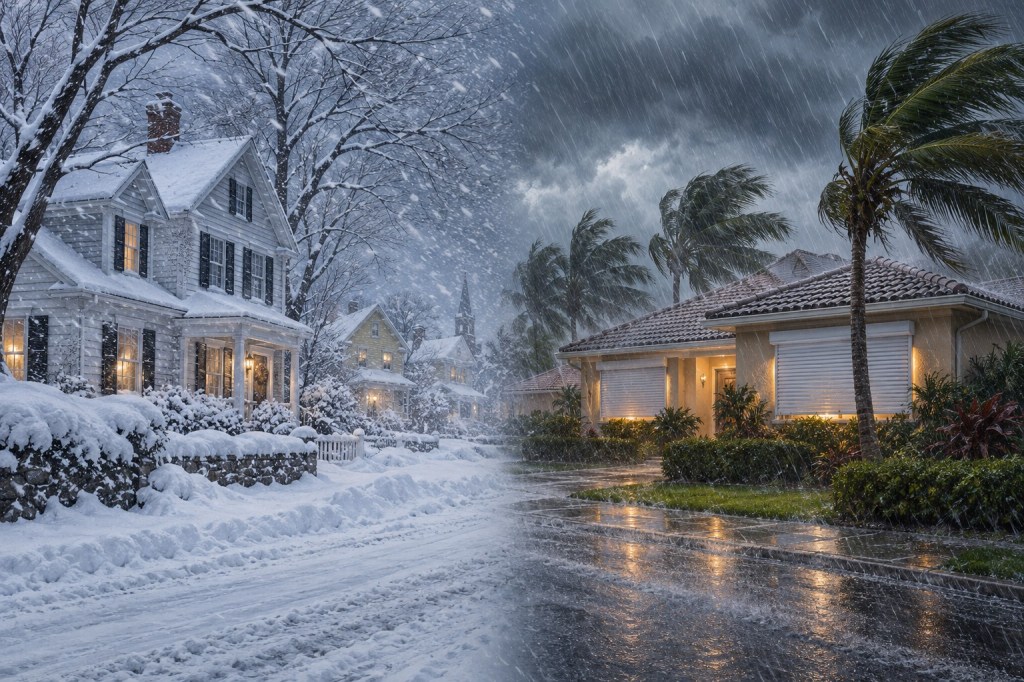
I came to Florida from New England, where serious winter storms were part of life. A powerful nor’easter could make travel impossible, knock out electricity and leave families dealing with bitter cold. Coastal residents had flooding and erosion to worry about, too.
Those experiences shaped how I look at Florida weather. Hurricanes deserve respect. So do New England blizzards. For someone deciding where to retire, the useful question is how to understand the hazards and choose a home accordingly.
A little history—and a misleading shortcut
The Tampa Bay hurricane of October 25, 1921, made landfall near Tarpon Springs. It flooded waterfront communities, damaged docks and boats, and pushed water into Tampa streets. The National Weather Service describes it as the area’s most destructive hurricane since 1848. For North Pinellas residents, this is history close to home.
Florida has other landmarks in its hurricane history. The Category 5 Labor Day hurricane devastated the Florida Keys in 1935. Hurricane Andrew struck South Florida in 1992 and helped drive a major overhaul of building standards. These were different storms affecting different parts of a large state. “Florida hurricane risk” is not one uniform experience.
Tampa Bay’s long interval without a repeat of the 1921 landfall became a familiar talking point. But the phrase “direct hit” can obscure more than it explains. Are we talking about downtown Tampa, Pinellas County or the wider region?
Milton, which caused extensive regional damage, made landfall near Siesta Key in Sarasota County on October 9, 2024. Naming the location is more useful than arguing over whether it qualified as a direct hit on Tampa.
And a long gap between nearby landfalls should never be treated as a promise about the next hurricane season.
The eye does not have to cross your neighborhood
Helene delivered that lesson in September 2024. Its center made landfall in Florida’s Big Bend, well north of Tampa Bay. Nevertheless, it produced devastating coastal flooding in Pinellas County.
The National Weather Service reported a record water level at Clearwater Beach and twelve direct deaths from storm-surge drownings in the county. Those losses occurred without the hurricane’s eye crossing Pinellas.
There are several hazards to consider separately:
- Wind, which can damage roofs, buildings, trees and power lines.
- Storm surge, when storm-driven seawater moves onto normally dry land.
- Rainfall flooding, which can affect inland neighborhoods as well as coastal areas.
- Tornadoes, which some tropical systems produce.
A hurricane’s category measures its maximum sustained wind. It does not describe its storm surge or rainfall flooding. Hearing “only a Category 1” therefore tells you too little to judge the threat to a particular address.
The forecast cone also requires care. It describes the probable track of the storm’s center, rather than the full area that could experience dangerous weather. Being outside the cone does not establish that your neighborhood is safe.
What about those New England nor’easters?
Anyone who has lived through a serious New England winter storm knows that its consequences can be severe. Nor’easters can bring damaging winds, coastal flooding and blizzard conditions. A winter power failure also carries the added challenge of keeping people warm.
That makes the comparison worthwhile, especially for people who already know how to prepare for bad weather. Checking forecasts, securing a home and planning for interruptions are familiar habits.
But there is no useful blanket rule that blizzards and hurricanes are equally dangerous. A coastal Florida house exposed to storm surge faces a different problem from an inland New England house isolated by snow. Storm strength, duration, location and individual circumstances all matter.
Experience with one kind of storm is a good starting point. Learning the local evacuation procedures and water hazards is the next step.
Do Florida’s modern building codes work?
Yes. Modern standards provide meaningful protection, and post-storm observations support their value.
Andrew exposed weaknesses in construction and code enforcement. The statewide Florida Building Code took effect on March 1, 2002, bringing a more consistent system of requirements and enforcement.
Hurricane resistance depends on the whole building: roof attachment, structural connections, roofing materials, windows, exterior doors and garage doors. Local wind requirements and the exposure of the site matter as well.
After Hurricane Ian, a mitigation assessment team found substantially better performance among newer buildings. The International Code Council’s account of the team’s work reported no wind-related structural damage in the post-code homes the team examined. Roof-covering damage still occurred in both newer and older buildings.
That is encouraging evidence, with an important boundary: it describes the inspected homes and the conditions they experienced. It is not a guarantee that every newer house will survive every hurricane without damage.
Florida emergency officials also emphasize condition. A newer home’s protection depends on its roof, straps, windows, doors and garage door remaining in proper working order.
Flood protection involves another set of considerations. Elevated homes generally performed better during Ian. Strong walls and protected windows cannot keep rising water out of a low occupied floor. A home can have good wind resistance and still require evacuation because of surge exposure.
Choose the property with your eyes open
For prospective residents, this is where the subject becomes practical. Hurricane questions belong on the home-shopping checklist alongside price, taxes and proximity to family.
Check the flood zone and the evacuation zone. These maps serve different purposes. Pinellas County notes that a property outside the mapped high-risk floodplain can still fall within a hurricane evacuation zone. Look up the actual address rather than relying on a description of the neighborhood.
Ask about the occupied floor’s elevation. The height of living space matters. An attractive house near the water deserves a careful look at its flood exposure and history.
Review the house’s construction and improvements. Ask when it was built, when the roof was replaced and what documentation exists for shutters, impact-resistant openings and other wind-protection features. Older homes can have valuable upgrades; newer homes still need inspection.
Understand the insurance. Florida emergency officials caution that homeowners insurance usually does not cover flood damage. Obtain property-specific quotes and review coverage and deductibles before committing to a purchase.
Make an evacuation plan that fits your household. Consider transportation, pets, medications and anyone who needs assistance. A plan should be workable when a storm is approaching, rather than something to improvise once roads become crowded.
Think about outages. For retirees, the ability to manage without electricity, air conditioning or ordinary services may be just as relevant as the house’s structural strength.
A sensible way to approach Florida weather
Moving to Tampa Bay should be an informed decision. Hurricane history belongs in that decision, along with the particular home’s condition, elevation and location.
Modern construction offers real reasons for confidence. The lessons of 1921, Helene and Milton offer equally real reasons to investigate water exposure and take evacuation instructions seriously.
My New England background has taught me that difficult weather is something to understand and prepare for. Here in Florida, that begins with knowing your home and knowing your address’s risks.
You can appreciate the Gulf Coast’s beaches, sunshine and waterfront communities while making thoughtful choices about where—and how—you live.


Leave a comment