Just north of North Pinellas County, an old Florida community is rediscovering the river, downtown and sense of identity that made it special in the first place.
When people think about communities north of Clearwater, their attention often stops at Tarpon Springs. That makes sense for anyone focused on North Pinellas County. But drive a little farther north, cross into Pasco County, and you will find a place that deserves a closer look: New Port Richey.
New Port Richey is not in North Pinellas, and it should not be confused with Port Richey, the separate city immediately to its north. It also is not simply a smaller version of Clearwater, Dunedin or Tarpon Springs. It has a personality of its own — part historic river town, part traditional Florida suburb, and part downtown comeback story.
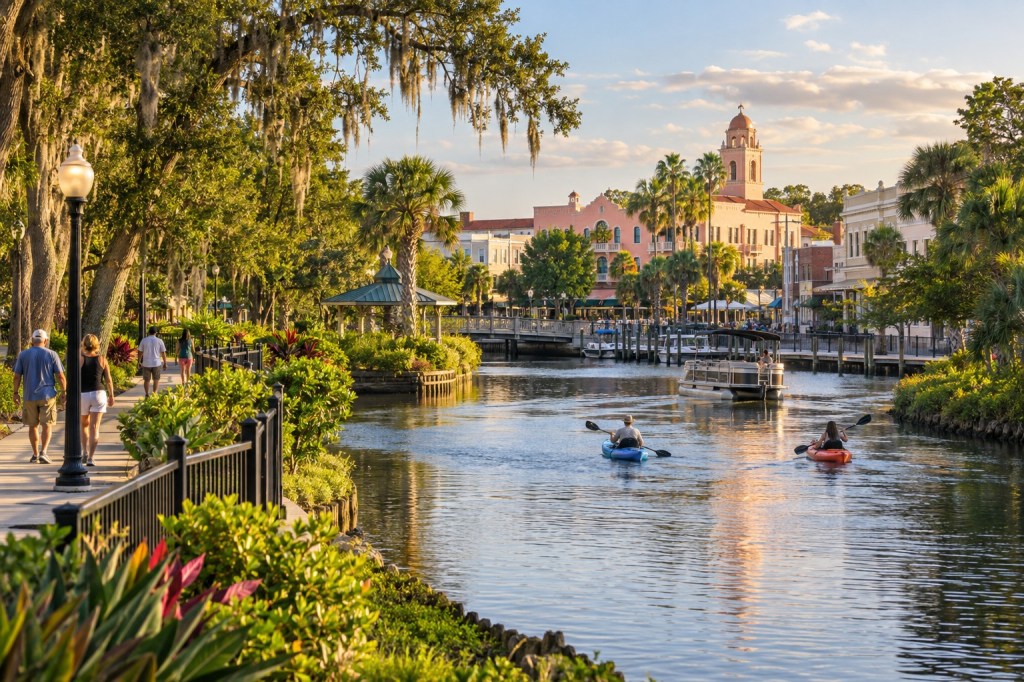
Today, the city’s compact downtown is attracting new restaurants, shops, events and attention. Historic buildings have been restored. Public spaces have been improved. The Pithlachascotee River (usually shortened to the much easier “Cotee River”) once again feels like the heart of the community.
New Port Richey is finding its way back to the future imagined for it a century ago.
A City Built Around a River
The Pithlachascotee flows through the city on its way toward the Gulf of Mexico, giving New Port Richey a greener, more intimate waterfront character than many communities built directly along open Gulf shoreline.
The modern settlement began taking shape in the early 1900s. The community was named for Captain Aaron M. Richey, who had established Port Richey nearby. The new settlement eventually became New Port Richey and was incorporated in 1924, when Florida was in the middle of its great land boom. Developers were selling visions of elegant new communities across the state. New Port Richey’s promoters saw the river, warm climate and proximity to the Gulf and believed the little city could become something much grander.
For a brief and fascinating period, they tried to turn it into a winter colony for stars of stage, screen and sport.
When Hollywood Came Calling
New Port Richey’s most colorful historical chapter began with Thomas Meighan, one of the best-known actors of the silent-film era. Meighan built an impressive home along the river and lent his name and celebrity to the city’s development efforts. His presence attracted other famous visitors, including entertainer Ed Wynn and golfer Gene Sarazen, who also built homes nearby.
Local boosters dreamed of making New Port Richey a second Hollywood. Some later accounts exaggerated exactly how many stars bought property or planned movie productions here, but the celebrity connection was real enough to leave a permanent mark.
The Meighan Theatre opened downtown in 1926. The building survives today as the Richey Suncoast Theatre, a reminder of the time when motion pictures were silent and New Port Richey thought it might become a center of the industry.
Then there was the Hacienda Hotel. Opened in 1927, the pink Mediterranean Revival landmark welcomed prominent guests and became the social center of the young city. The Florida land boom collapsed, the Great Depression followed, and New Port Richey never became Hollywood East. Yet the Hacienda endured. It was carefully restored and reopened as a hotel in 2022.
Downtown Comes Back to Life
The story of New Port Richey today is centered on a few walkable blocks around Main Street, Grand Boulevard and Sims Park.
Independent restaurants, coffee shops, bars, boutiques and service businesses now occupy older storefronts. The historic theater continues to present live performances. Murals and public art add color, while regular concerts, markets and festivals bring people into the city center.
New Port Richey Main Street, established in 1986, has spent decades supporting local businesses and promoting downtown revitalization. More recent city projects have improved parking areas, streetscapes and public spaces. In 2025, the city’s centennial celebration produced “Tides of Time,” a permanent collection of 11 small bronze sculptures placed at historic downtown locations. Together, they form a walking tour through the city’s past.
Railroad Square and Nebraska Avenue have been the focus of improvements, and in 2026 the city sought proposals for redevelopment of the highly visible former health department building at Main and Bank streets.
Sims Park and the Cotee River
Sims Park occupies a broad green space beside the river in the center of town. It includes walking paths, shaded areas, a playground and splash pad, an amphitheater, and places to sit near the water. Orange Lake, immediately beside it, adds another quiet focal point.
The park is where New Port Richey gathers. Outdoor concerts, holiday celebrations and community events routinely take place there. The city’s signature celebration, the Chasco Fiesta, traces its beginnings to 1922 and now fills nine days with music, a carnival, parades, car shows and other activities in and around Sims Park and downtown.
Cotee River Park extends the outdoor connection beyond the central blocks and is popular with walkers and bicyclists. Kayaks and small boats provide a different view of the river, which meanders past parks, neighborhoods and old waterfront homes before reaching the Gulf.
Nearby nature is another advantage. Werner-Boyce Salt Springs State Park, west of U.S. 19, protects roughly four miles of coastal habitat. The park is best explored by kayak, with mangrove waterways, salt springs, wildlife and views of a side of Pasco County that motorists traveling along U.S. 19 may never suspect is there.
What Living There Is Really Like
The incorporated City of New Port Richey is surprisingly small—only a few square miles, with a population of roughly 17,000. The much larger area commonly described as “New Port Richey” includes many unincorporated Pasco County neighborhoods beyond the city limits.
That distinction matters when looking at homes. An address that says New Port Richey may be close to the historic downtown, several miles inland or in a Gulf-side community well outside the city. Taxes, municipal services, flood exposure, neighborhood character and proximity to amenities can vary considerably.
Housing is equally varied. Near downtown and along the river are older cottages, mid-century homes and distinctive properties from the city’s early years. Elsewhere, buyers will find established subdivisions, condominiums, villas, manufactured-home communities and newer developments. Compared with much of Pinellas County, Pasco has traditionally offered buyers more space and somewhat lower prices, although values and insurance costs can vary.
The tradeoffs deserve attention. U.S. 19 provides a direct north-south route but can be heavily traveled and visually commercial. A location that seems close on a map may feel less convenient at rush hour. Homes near the river or coast may face meaningful flood and storm-surge risk. Buyers should check the current flood zone, obtain realistic homeowners and flood-insurance estimates, and understand whether a property lies inside the city limits before making a decision.
For healthcare and daily needs, the broader New Port Richey area offers hospitals, medical offices, grocery stores and the familiar services of an established community. Tampa International Airport and the larger employment and cultural centers of Tampa Bay are farther away than they are from much of Pinellas, but still accessible for people who do not need to make the trip every day.
Who Should Take a Look?
New Port Richey may appeal to people who like the Gulf Coast lifestyle but do not need to live directly on a beach. It is worth considering if you prefer a small downtown to a large urban center, enjoy parks and community events, appreciate historic buildings, or want to explore housing choices beyond Pinellas County.
It may be especially interesting to retirees and relocators who like Tarpon Springs but are willing to look a little farther north. The two cities share some qualities — history, access to the water and a recognizable downtown — but they do not feel interchangeable. Tarpon Springs is strongly shaped by its Greek heritage and tourist-oriented Sponge Docks; New Port Richey feels more like a river town rediscovering its own center.
That “rediscovery” is the reason to pay attention. The city is investing in downtown properties and gathering spaces. New Port Richey is not polished into perfection, and that may be part of the opportunity. It still has rough edges, traffic challenges and neighborhoods that vary greatly from one another. But it also has something many newer Florida developments can never manufacture: a real history, a real downtown, and a river running through the middle of both.
Would you like to know more about New Port Richey, or about living in this part of Florida? I’d be happy to chat with you. 727-643-7100 or bethfrederickRE@gmail.com .


Leave a comment