

Walk along the Sponge Docks in Tarpon Springs today and modern Florida can seem very far away.
Greek music drifts from restaurants. Blue-and-white Greek flags flutter outside shops. Bakeries display baklava, koulourakia and other traditional pastries. Sponge boats line the Anclote River. Storefronts offer natural sponges in every size and shape.
This doesn’t feel quite like anywhere else in Tampa Bay, and there are some very good reasons for that.
Tarpon Springs’ Greek identity is the result of more than a century of immigration, dangerous work on the Gulf of Mexico, entrepreneurship, religion, and family traditions. But the story of Tarpon Springs actually begins before the Greeks arrived.
Before the Sponge Divers
The area surrounding the Anclote River attracted settlers well before Tarpon Springs became a city. The community’s unusual name is generally associated with the large fish early visitors saw jumping from the local waters. Whether those fish were actually tarpon has been debated, but the name stuck.
By the 1880s, Florida’s Gulf Coast was beginning to attract wealthy northerners looking for warm winters, fishing opportunities, and undeveloped waterfront.
Tarpon Springs incorporated on February 12, 1887, making it the oldest incorporated municipality in what is now Pinellas County. In that same year, the railroad arrived.
It was a small community, but commerce was growing, and offshore lay something that would change Tarpon Springs forever — sponges.
A Treasure Beneath the Gulf
Natural sponges had been harvested in Florida waters before Tarpon Springs became involved in the industry. Sponge fishermen, particularly those in Key West, collected them by using long poles fitted with hooks.
Around 1890, Tarpon Springs businessman John K. Cheyney sent out his first sponge-fishing boat. The waters off Florida’s Gulf Coast contained commercially valuable varieties of natural sponge, and Tarpon Springs was well positioned to become a center for harvesting and selling them.
But harvesting sponges from the surface had limitations, and that method was changed forever by a Greek immigrant named John Cocoris, who came to Tarpon Springs in the late 1890s.
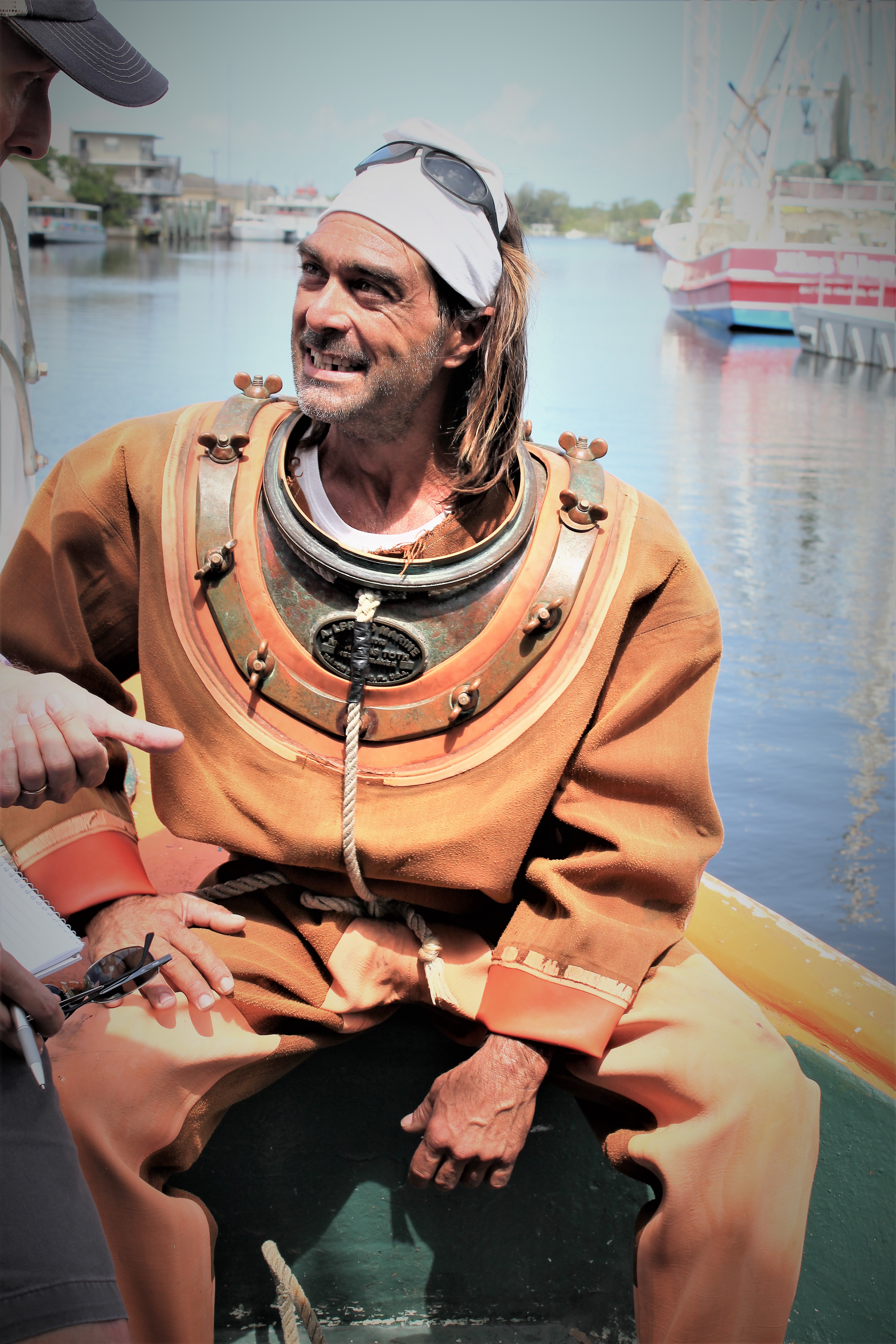
In Greece, sponges were harvested by divers who descended to the sea floor in heavy diving suits and helmets supplied with air from the surface. Cocoris introduced that harvesting method here, and brought experienced sponge divers over from Greece. The results were dramatic.
National Park Service historical records indicate that roughly 500 Greek men arrived during the summer of 1905. Within a year or two, about 100 sponge boats were based in Tarpon Springs, with as many as 1,500 Greeks working Florida waters.

The Greeks Build a Community
The newcomers came from islands with centuries-old maritime traditions, including Kalymnos, Halki and Symi in the Dodecanese, as well as Aegina and Hydra.
At first, they came primarily because there was work. Then, they began bringing their families. Others followed because a rapidly growing Greek community needed businesses and services.
Restaurants opened, along with bakeries, grocery stores and coffeehouses. Greek sponge merchants established warehouses and offices. Boat builders, mechanics, ship suppliers and tradesmen found opportunities along the waterfront. Greek investors helped finance sponge boats and voyages. The Sponge Exchange Bank was established in 1906, and the Tarpon Springs Sponge Exchange followed in 1908. The exchange provided a central location where harvested sponges could be sorted, stored, graded and sold.
This was no longer simply a group of immigrants working temporarily in an American fishing town; these became people building homes, families, and one of the most distinctive ethnic communities in Florida.
The Sponge Capital
Sponge boats left Tarpon Springs for trips that could keep their crews at sea for weeks. Divers descended in cumbersome suits and metal helmets to walk along the Gulf floor. It was difficult and sometimes dangerous work, but there was money to be made.
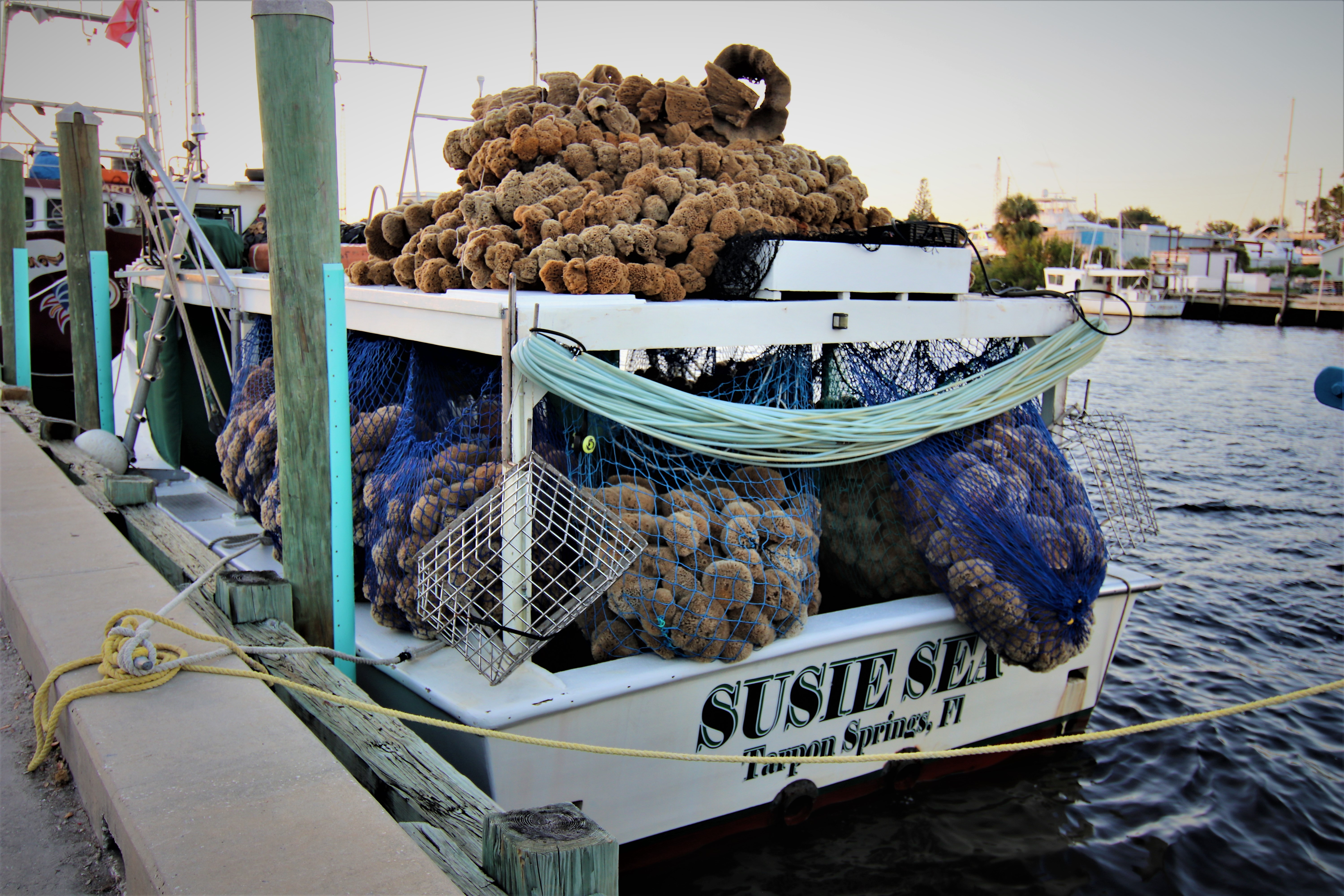
By the early 20th century, Tarpon Springs had become the foremost sponge port in the U.S., and it became internationally known.
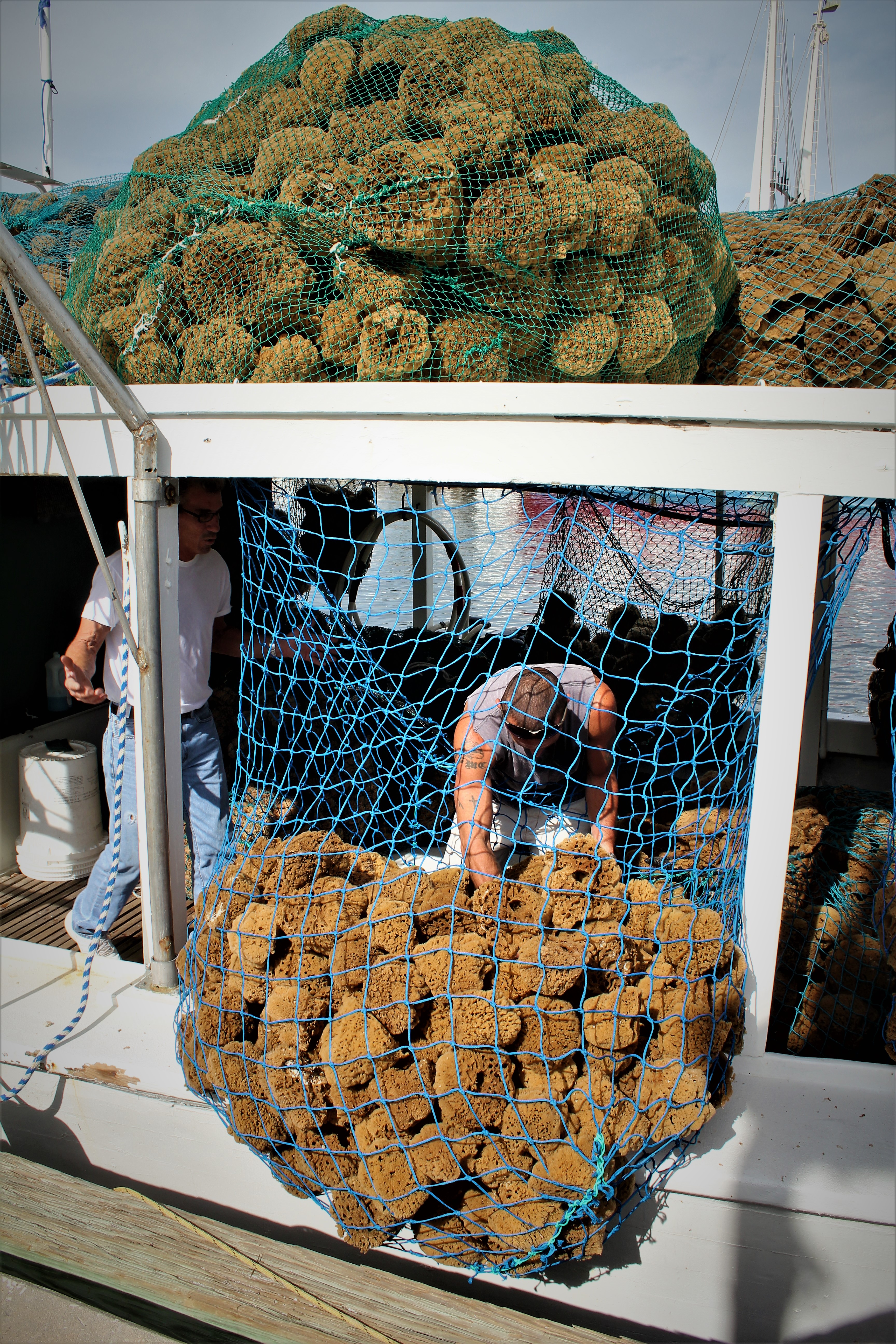
The sponge docks became the working heart of town. Boats arrived carrying their harvest. Sponges were cleaned and dried, then brought to the exchange where buyers and merchants negotiated over them. Sponge money helped finance other businesses throughout Tarpon Springs, including banking, construction, transportation, fishing and retail establishments.
By the 1930s, the industry was enjoying its peak years. But then nature — and technology — intervened.
When the Sponges Disappeared
Beginning in 1939, disease struck the sponge beds in the Gulf and dramatically reduced the number of healthy natural sponges available for harvest. The industry eventually recovered to some extent, but then another competitor emerged — the synthetic sponge.
Manufactured sponges could be produced cheaply and consistently, and so natural sponging declined.
That could have spelled the end of Tarpon Springs, but it didn’t.
A Little Piece of Greece in Florida
The Greek immigrants who settled Tarpon Springs brought much more with them than knowledge of sponge diving; they also brought their language, music, food and Orthodox Christian faith.
St. Nicholas Greek Orthodox Church became the spiritual center of the community. Greek families maintained customs that had traveled across the Atlantic with their parents and grandparents.
Perhaps no tradition demonstrates that continuity better than Epiphany. Each January 6, Tarpon Springs hosts an elaborate Greek Orthodox Epiphany celebration commemorating the baptism of Jesus Christ. One of its best-known traditions takes place at Spring Bayou, where young men dive into the water seeking a white cross thrown by a church official.
The celebration’s roots in Tarpon Springs stretch back generations; a Florida historical account from the 1930s was already describing the annual blessing of the waters as an established local tradition. Today it is one of the city’s signature events and one of the most visible expressions of Greek-American culture in the United States.
More Than the Sponge Docks
Visitors tend to associate Tarpon Springs with Dodecanese Boulevard and the Sponge Docks, but the city is more than that.
Historic downtown, centered around Tarpon Avenue, tells another part of the story. Its older commercial buildings, antique shops, restaurants and small businesses reflect the city’s life beyond the waterfront.
Residential streets reveal still another Tarpon Springs: historic homes shaded by mature trees, neighborhoods near the bayous, and newer communities that grew as northern Pinellas County developed.
The city’s history also included communities beyond its famous Greek population. African Americans lived in Tarpon Springs from its earliest years, and Bahamian residents arrived during the late 19th century. Historical research for the National Register of Historic Places records that Black Tarpon Springs residents worked aboard sponge boats and in warehouses, with some developing close relationships with Greek workers and even learning Greek.
That makes the city’s history more complicated — and more interesting — than the simple story of a Greek fishing village.
The Industry Becomes an Attraction
As commercial sponging declined, something interesting happened.
People didn’t want to forget about it.
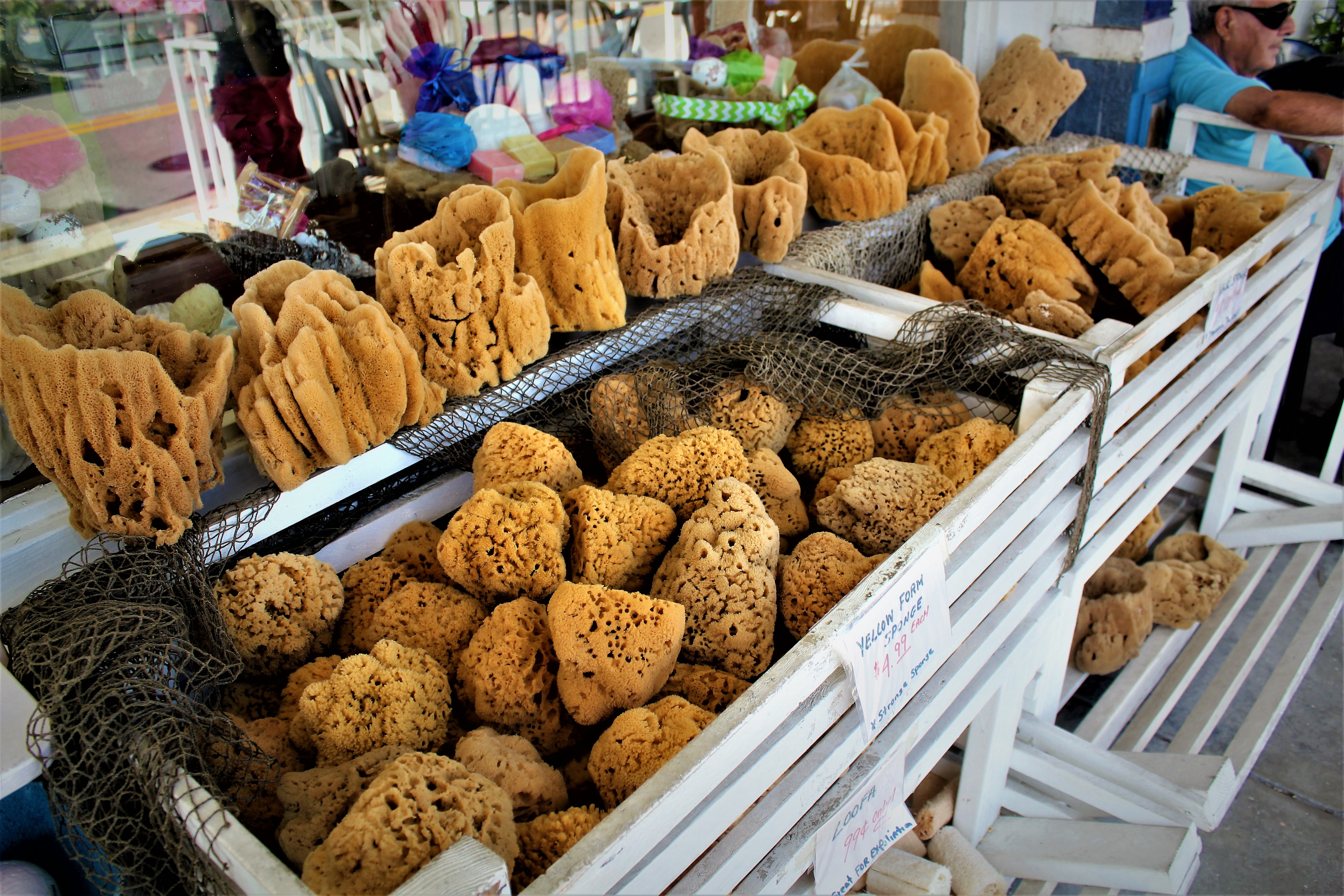
The sponge boats, Greek restaurants, shops and waterfront that had grown around a working industry became attractions themselves. Tourism increasingly helped sustain the Sponge Docks and preserve traditions that might otherwise have disappeared. Visitors could watch demonstrations of traditional sponge diving, take boat excursions, buy natural sponges and eat food descended from recipes brought to Florida generations earlier.
The working waterfront became part history museum, part entertainment district, and part real living community.
Tarpon Springs isn’t merely pretending to be Greek for visitors. Many of the traditions visitors encounter are the descendants of traditions practiced by the people who actually built the community.
Tarpon Springs Today
More than a century after the first great wave of Greek sponge divers arrived, their influence remains unmistakable and alive. Tarpon Springs has grown far beyond the little sponge port of 1905.
People move here today for many of the same reasons they move elsewhere in northern Pinellas County: Florida weather, Gulf Coast living, boating, beaches and proximity to the larger Tampa Bay area.
But Tarpon Springs offers something else — a very strong sense of place.
You can see it in the old buildings downtown. You can hear it in Greek conversations around the Sponge Docks. You can taste it in family-owned restaurants and bakeries. You can watch it each January when thousands gather around Spring Bayou for Epiphany.
And you can still see sponge boats tied along the Anclote River.
For someone considering a move to the Tampa Bay area, that may be one of the most important things to understand about the communities here. North Pinellas isn’t simply a collection of subdivisions; its towns grew differently, and attracted different people. And few demonstrate that better than Tarpon Springs.
Interested in learning more about Tarpon Springs? Get in touch with Beth Frederick anytime: 727-643-7100 or bethfrederickRE@gmail.com
Photos by Bill Frederick


Leave a Reply