
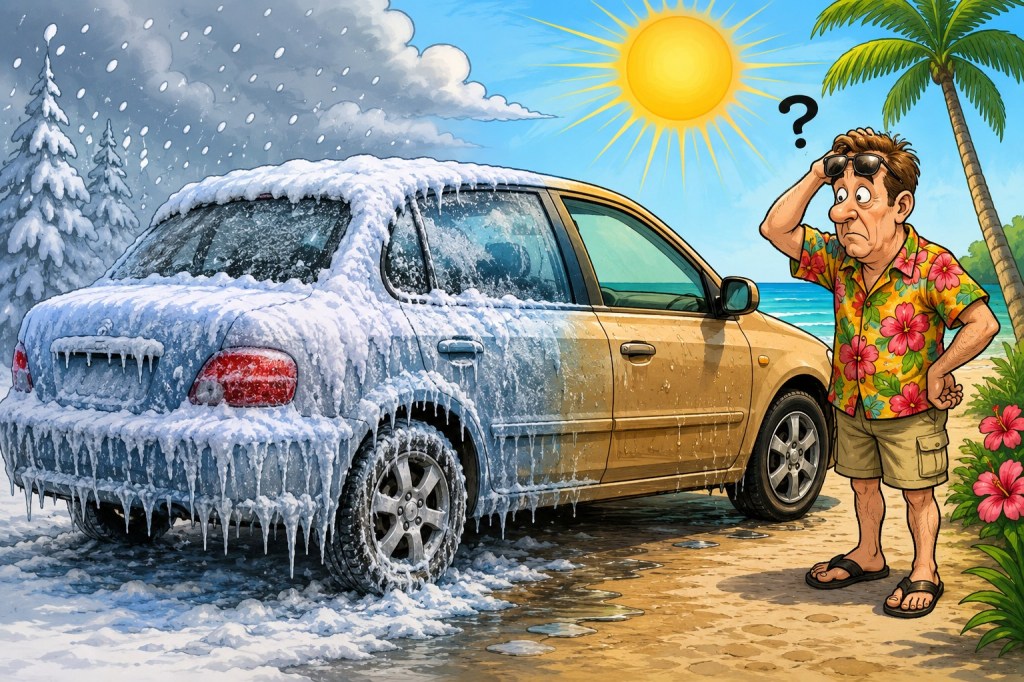
Your car survived years of Northern winters. Florida is going to try to kill it differently.
If you’ve just moved to Tampa Bay or you split time between here and somewhere up north, you already know our weather feels like a different planet. What surprises a lot of newcomers—especially folks who are used to snow, road salt, and freezing temps—is that Florida can actually be harder on your car than those brutal winters ever were.
It doesn’t happen overnight, so it’s easy to miss at first. But a few summers into life in Pinellas or along the Gulf, you start to notice: the paint doesn’t quite have the same depth, the dashboard looks a little chalky, the headlights are hazy, rubber trim is tired, and your leather feels older than it should. That’s the combination of sun, heat, humidity, and salt air quietly aging your car faster than you’re used to.
Up north, the big enemies are road salt, frozen slush, and potholes. Here, the real bully is UV radiation combined with heat and coastal air. Even if you’re just running errands around Clearwater or heading over the bridge to Tampa a couple times a week, your car is getting blasted.
What the Florida sun actually does to your car
Paint oxidation and fading. That deep gloss you love is thanks to layers of clear coat over your paint. Strong, year-round sun breaks those layers down. Over time, the surface turns dull or chalky, especially on horizontal panels like the hood, roof, and trunk that catch the most rays. Dark colors and reds are usually the first to show it.
Clear coat damage. Once the clear coat is weakened, you can end up with patchy, cloudy areas or peeling—what people sometimes call “sunburned” paint. In a northern climate, that kind of damage might take decades. Here, a car that lives outside can start showing it in just a few years.
Interior fading and cracking. Glass does not stop UV the way most people think it does. The sun turns your cabin into a slow-cooking oven. Dashboards dry out and crack, leather stiffens and loses color, and cloth upholstery fades. You might notice the top of your steering wheel and the top of the back seats going first—that’s where the sun hits the hardest.
Rubber seals and tire degradation. Door seals, window trim, wiper blades, and even tires age faster in constant heat and UV. Rubber gradually dries, loses flexibility, and can start to crack. If you live close to the water—say, in St. Pete, Largo, or along the beaches—that salty moisture in the air speeds the process up.
The UV + humidity + salt air combo. Coastal humidity helps salt cling to your car’s surfaces, and that moisture sticks around longer than it would in a dry climate. UV weakens clear coat and plastic, humidity feeds oxidation and mildew, and salt works its way into every nook and cranny. That’s why cars that live near the Gulf often look “tired” sooner, even if they don’t have a ton of miles.
The basics everyone should do
You don’t have to become a full-time car hobbyist to keep your vehicle looking good here. A few simple habits will put you miles ahead of the curve, especially if you plan to keep a car for a long time or want it to hold value for resale.
1. Park in shade or a garage whenever you can. It sounds almost too simple, but limiting direct sun exposure is one of the most effective things you can do. If your new condo or villa includes covered parking, use it. When you’re out and about, it’s often worth walking a little farther to a shadier spot under a tree or on the north side of a building.
2. Use a windshield sunshade. Those reflective fold-out shades aren’t just for tourists. They dramatically cut the greenhouse effect inside your car and protect your dashboard, steering wheel, and electronics from baking. If you run errands during the day or go to the beach often, make using a sunshade as automatic as putting the car in park.
3. Keep up with wax or sealant. A quality wax or paint sealant adds a sacrificial layer between your paint and the elements. In this climate, once or twice a year is a bare minimum, and more often is better if your car lives outside. It doesn’t make your car invincible, but it slows down fading and makes washing easier.
4. Wash regularly, especially near the coast. If you’re in Pinellas County, you’re never far from salt air. Even if your car still looks clean, there can be a fine layer of salt and grime sitting on it. A gentle wash every couple of weeks helps keep that from sitting on your paint, wheels, and trim. After beach trips, rinsing the car (and especially the undercarriage) is a good habit.
5. Check tire pressure more often. Heat makes the air inside your tires expand, and day-to-day temperature swings can be bigger than you think here. Underinflated tires wear out faster and run hotter; overinflated tires can ride harshly and reduce grip. Get in the habit of checking pressures at least once a month, and before longer drives across the state.
Stepping it up: professional paint protection strategies
If you’re planning to keep your car for many years, or you’ve treated yourself to a nicer vehicle in retirement, it can be worth stepping up from the basics. Tampa Bay actually has a strong car-culture community, and that’s brought some excellent professional protection options to our area.
Ceramic coatings. A ceramic coating is a liquid product applied to your paint that cures into a thin, hard layer bonded to the surface. It’s hydrophobic, so water beads and rolls off more easily, and it offers better UV resistance than wax. It won’t stop rock chips, but it does make the car easier to clean and helps paint hold its depth and shine longer in our intense sun.
Paint Protection Film (PPF). Where ceramic is more like a high-tech sunscreen, PPF is a physical shield. It’s a clear film applied to high-impact areas like the front bumper, hood, mirrors, and door edges. It absorbs small rock chips, sand, and road debris—really useful if you spend time on the interstate, drive over the bridges often, or take trips across the state.
Window tint. A good quality tint does three big things: it cuts harsh glare, blocks a significant amount of UV, and keeps the cabin noticeably cooler. That means more comfort for you and less stress on interior materials. Florida has specific rules about how dark tint can be, so it’s worth using a reputable shop that understands the regulations.
If you’d like local help, CoaterZ is a Tampa Bay area specialist in ceramic coatings, PPF, and tint, with shops in Lutz and Sarasota, so they’re convenient whether you’ve settled in north Tampa, Pinellas, or down toward Sarasota.
A closer look at interior protection
When people think about protecting their car in Florida, they usually picture the outside. But the inside can age just as quickly—sometimes faster—because of how much time we spend parked in open lots during the hottest parts of the day.
UV through glass is sneaky. Even on a partly cloudy day, UV is streaming through the windshield and side windows. That’s why you’ll see older local cars with dashboards that look dusty or cracked, door panels that don’t match the original color, or leather that’s rough on the seat bolsters.
Ceramic interior coatings. These are similar in concept to exterior ceramic coatings but designed for leather, vinyl, and fabric. They help repel spills, make surfaces easier to wipe clean, and add a bit of protection against UV and abrasion. If you’re the type who wants to keep a light-colored interior looking new, they’re worth asking about.
Window tint as interior insurance. Beyond comfort, tint is one of the best investments you can make for your cabin materials. By cutting down on UV and infrared heat, it slows the drying, fading, and cracking that surprise many new residents. Combined with a sunshade and occasional conditioning of leather or vinyl, it can easily add years of life to your interior.
Closing thoughts: you planned your move, now plan for your car
When you decided to move to Tampa Bay, you probably spent a lot of time weighing neighborhoods, healthcare options, proximity to the beaches, and all the other quality-of-life pieces that matter for the long haul. Your car might not feel as important as those decisions, but it’s a big part of day-to-day life here—getting to appointments, visiting grandkids, exploring new restaurants, or heading down to the water at sunset.
A little planning and protection now means your car will age with you gracefully, instead of feeling old before its time. Park smart, block the sun, keep things clean, and consider professional protection if you want to really lock in that “new car” feel. It’s one of those small, practical adjustments that helps your Florida chapter start off on the right foot—and keeps you enjoying the drive for years to come.


Leave a comment